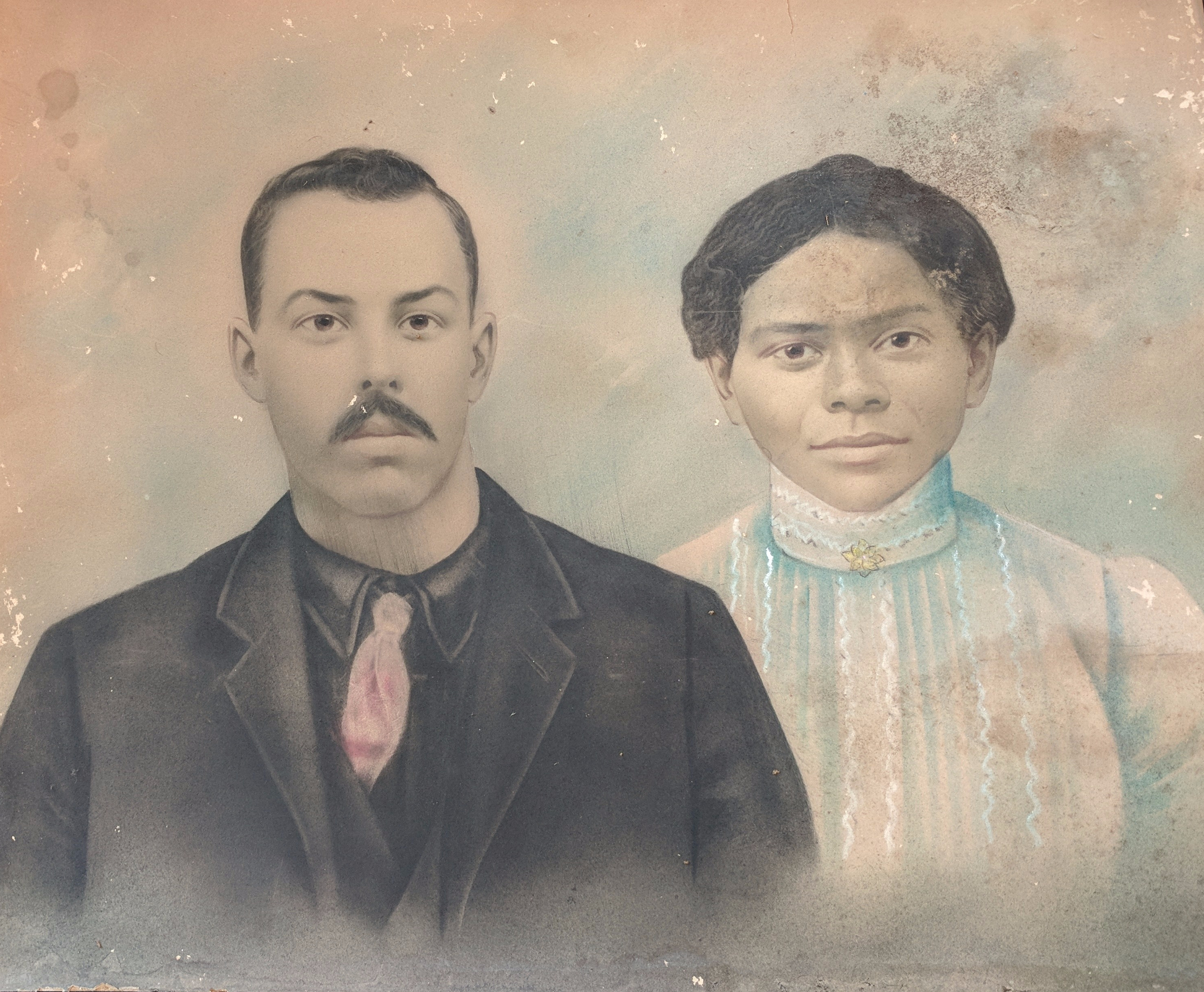
One of my favorite pieces of family lore revolves around my great-grandfather, Robert, called Shack, who purportedly was one of the most successful bootleggers in West Tennessee during Prohibition.
His son, my great uncle, also called Robert, loved to brag that Shack was never caught plying his trade. Shack often boasted that he never worked an honest day in his life, supporting his family in fine fashion by producing bootleg whiskey and shooting dice.
In one instance, the local sheriff assigned two deputies to follow Robert The Elder around for a week, knowing that the local juke joint was due for a resupply.
On Friday afternoon, the deputies trailed Shack in a police cruiser as he made the four mile walk into town. Even stopping to frisk him a couple of times to assure themselves that Shack carried no contraband.
Satisfied they’d done their job, they returned to headquarters to report on a successful completion to their assignment.
Nothing could have been further from the truth.
The fully resupplied juke joint conducted Friday night business uninterrupted. One can only imagine the embarrassment at headquarters the next day. How did Shack accomplish this blatant act of subterfuge?
This is the part of the story that Uncle Robert took particular glee in telling.
Shack delivered his specific brand of moonshine in concentrated form – much like orange juice – small enough to fit into a coffee can which he wrapped in shipping paper. He blended the final product on site.
To sneak his package past his police tail he attached one end of a wire to the package and threw it into the drainage ditch alongside the road. The other end of the wire went into his pocket. He strolled into town walking his can of hootch like it was a pet dog. The wire was thin enough that the deputies could not see it from their vehicle and whenever Shack saw them approach, he merely dropped the wire, stood patiently while they frisked him, and then retrieved the wire once they’d left.
Tennessee of that day was an openly racist, segregated, hierarchy, though one could make the argument that little has changed in the material lives of Black Tennesseans since. Schools are now segregated by tax codes and vouchers rather than law, for instance. The legacy of slavery hung heavily over Black men like Shack in pre-World War II Tennessee. The odds were stacked against him from birth. He had little to no chance of learning to read, let alone getting an education and his life was in constant risk of racial violence. The Klan, which briefly became active at the end of the Civil War to stem the tide of black suffrage, experienced a resurgence in the early 20th Century after the release of D.W. Griffith’s “Birth of A Nation” which glorified the “knights” of the Klan as the protectors of white society. President Woodrow Wilson praised the film after a private screening at the White House.
Another piece of family lore involves the lynching of Joe Boxley, a farmhand of limited mental capacity, who worked for a white family in Crockett County, Tennessee, where Shack plied his trade. Like Potiphar’s wife of the Old Testament, the matriarch of the family was said to relentlessly pursue Joe in a clandestine attempt to seduce him. Joe had enough sense to never be caught alone with a white woman, but his family was broke enough that he couldn’t afford to quit the job. Eventually, the woman fell ill of a mysterious malady and spent several days in bed barely conscious. When she finally came out of her stupor her first words were, “Joe?”
Such was the backdrop of the times as Shack prepared, packaged, and distributed his wares. We, his descendants, have portrayed him as an anti-hero of sorts, taking the bad hand dealt him and running a successful enterprise in “the underground economy.” Accordingly, his family wanted for nothing. Yet there were repercussions.
In later years Uncle Robert often noted that while they were at Shack’s back door on Saturday night for a personal sample of “the recipe” (they couldn’t well be seen at the local juke), the upstanding members of Crockett County’s Black society vilified Shack on Sunday thru Friday. So much so that Uncle Robert, Shack’s only son, a star athlete, and standout student was shunned by polite society. Hardened by the hypocrisy of it all, Uncle Robert determined that “if they were going to brand me a ‘bad nigger’ I’d be the ‘bad-est nigger’ imaginable.”
Never to do anything half assed, Robert Glenn fully threw himself into his new chosen path. He made his living running his father’s whiskey and illegal gambling. Mostly dice. Unlike Shack, he paid little heed to those he crossed on either side of the law. Reflecting back decades later he would wonder if he’d manifested a type of death wish. By his own admission, he took unimaginable, unnecessary risks, often escaping disaster by a hair’s breadth.
But, in his eyes at least, he was honest about who he was and what he was doing even if his path led ultimately to self-destruction.
Eventually though, after one close call too many, he’d had enough. With few options and nowhere to go (Shack believed in “every pot sitting on its own bottom”), he added a couple of years to his age and enlisted in the army around the time armed services cleared the way for Black soldiers to fight in World War II. Uncle Robert was shipped to the European theater where he served with distinction. But that’s a story for another day.
What I’m interested in is the justifications, lies really, Uncle Robert and Shack had for their behavior.
We’re all the heroes in our own stories, usually underdogs, regularly misunderstood, often tragic. We make our personal odysseys against inconceivable odds to get the girl/right the wrong/defeat the monster.
Or so we tell ourselves.
To be clear, the obstacles that Shack and his son faced were ready made for a hero’s journey: a rigged justice system, legal slavery in the form of Jim Crow segregation and sharecropping, the constant threat of white violence, and the further indignity of the hypocritical condemnation of “proper” Black society.
How did they choose to respond?
Shack made and sold illegal whiskey, an unregulated, often dangerous substance, largely to his own community. In his times, the main risks of consuming moonshine were from poisoning from contaminants like lead, methanol, and arsenic. The results were often blindness, kidney damage, and death. I have no way of knowing to what level Shack maintained his quality controls. But it is quite possible, Shack made a very comfortable living from the high likelihood of poisoning his own people. Now, let’s assume for a moment that no one got sick or died from his “brew.”
Put bluntly, given the racial disparities of the Depression Era, pre-war South, Shack made a living salving the misery of his neighbors with an addictive substance.
Likewise, Shack’s son, my Uncle Robert, profited from the sale of the same illegal (probably tainted) whiskey, and by his own admission, “raised as much hell” as he could. In fact, he delighted in it, particularly with respect to the “fairer sex.” He told me that he never hurt anyone physically other than in self-defense. Though short on details, he confessed that he left “a trail of misery” in his wake in those days.
They were both villains of the highest order; exploitive, manipulative, heartless. Shack plied his trade in the manner of the modern tech bro sociopath. Beholding only to the bottom line. What did he care for the lives his product damaged? They consumed it of their own free will.
Robert merely met the community standards set before him. He often said that he “gave ’em what they wanted” or expected at least.
Did either of them interpret their behavior as villainy?
Of course not.
Do you?
We all manufacture justifications for our wickedness. Justifications often built on the lies we tell ourselves so that we can stand ourselves. Ironically, we often think too highly of ourselves because we fear that we are worthless. We create heroic narratives for our behavior to distract our minds from the compromises we make to our integrity, the harm we cause, the manner in which we exploit others for gain. Rather than make amends we pursue delusion. Making amends would require us to abandon our carefully constructed fantasies that undergird our self-image.
We may not lynch or poison our neighbors or exploit our peers. But we are often curt and rude to elderly relatives because of questions asked one time too many (there’s even a limit to the allowance for senility). We will unduly punish a child over a minor infraction behind a particularly frustrating commute home. We will lash out a colleague in jealousy.
And then we expand on the assumed affrontery to avoid addressing the issues that drive our behavior. We construct a hero’s narrative to justify our transgressions. Because we’re all afraid of facing what we don’t like about ourselves. We’re all warping the concept of morality to fit the shape of our fantasies. We’re all taking shortcuts to our desired outcomes. We’re all constantly looking for excuses for our questionable behavior (and doing it loud and wrong).
We’re all villains.
 Snollygoster